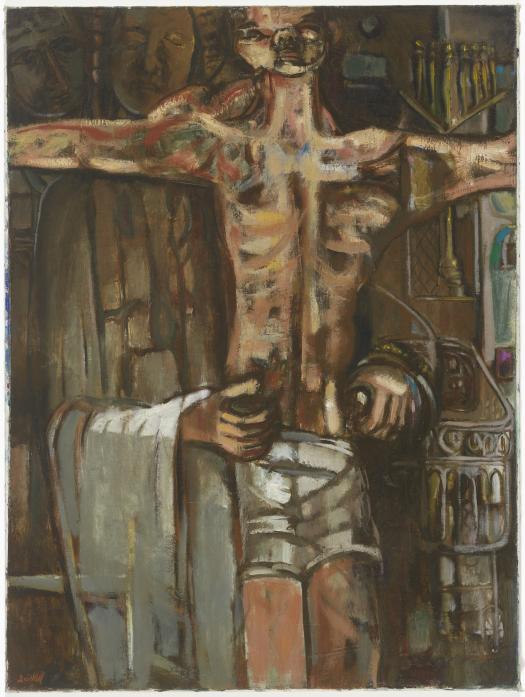
This is the 1956 painting titled, “Behold Thy Son,” by David C. Driskell. The title of the painting comes from a Bible quote, from John, Chapter 19, verse 26. “When Jesus therefore saw his mother, and the disciple standing by, whom he loved, he saith unto his mother, ‘Woman, behold thy son!’” This work was created as a tribute to Emmitt Till, the 14-year-old African American boy who was brutally tortured and murdered less than a year earlier. It addresses a mother’s heartbreaking loss of her son.
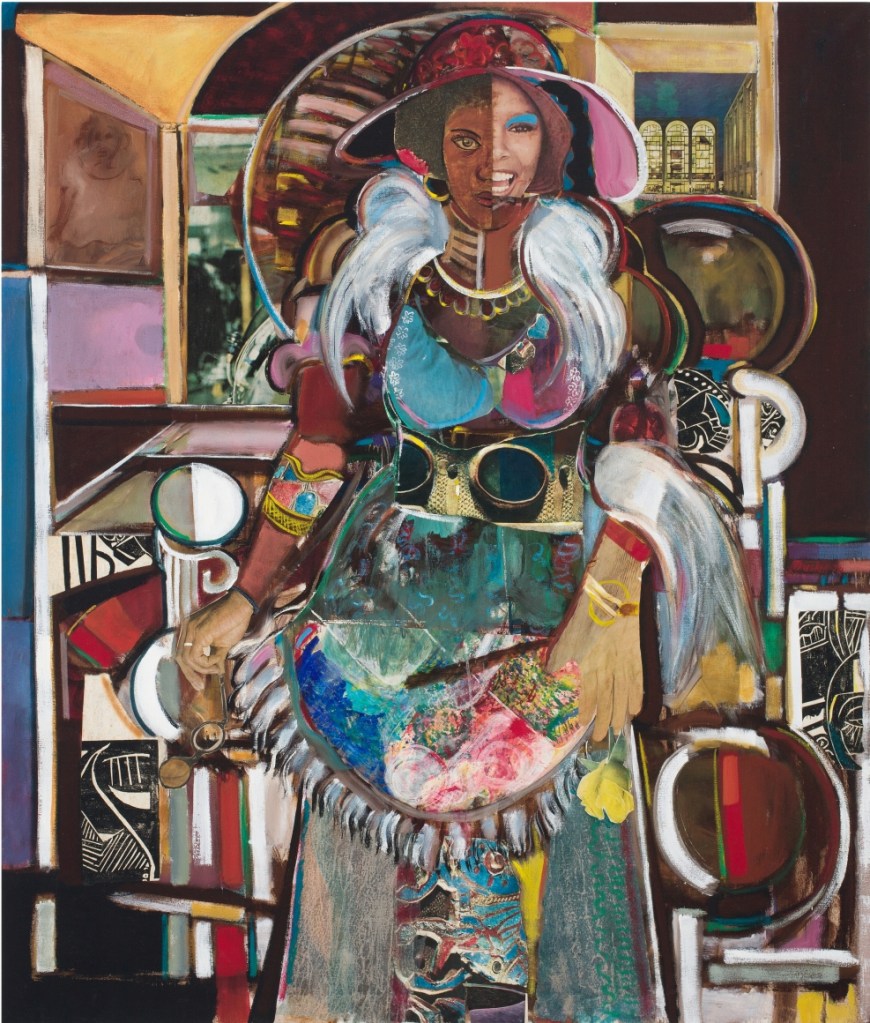
Discussion w/ ElleBeah: Jazz Singer (Lady of Leisure, Fox), 1974
This episode is a little different. I consider it a “pre-episode” episode. It’s more like an introduction into the work of David Driskell, the artist I’ll be covering next on The Whole Art Nebula. In this, I discuss his work titled, “Jazz Singer (Lady of Leisure, Fox)” with my good friend ElleBeah.
This is just a portion of a longer conversation. I’ve given access of the entire conversation to Patreon members at the Oasis level as in incentive to support our brand new art history podcast. To visit our Patreon page, go to, https://www.patreon.com/thewholeartnebula. Otherwise, please enjoy.
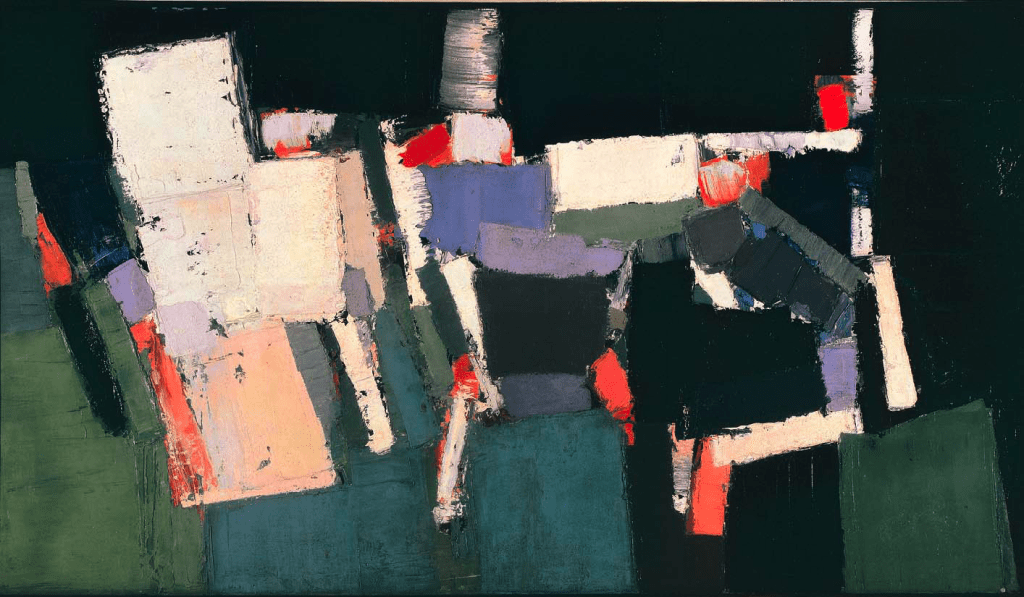
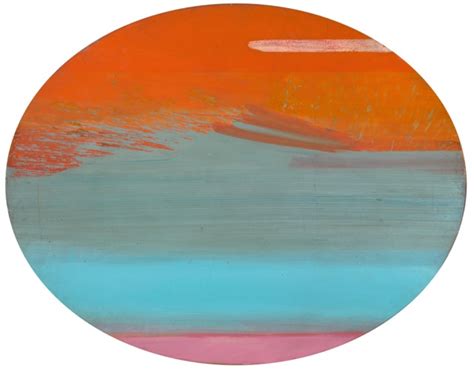
I’d like to first start off by saying, in my initial research about the life of Ed Clark, there wasn’t a whole lot online about his personal background, such as family, childhood and so on. So, sometime in the future, I might go back in for a deeper dive to see what I can find.
Okay. What I did find was that Ed Clark was born in the Storyville section of New Orleans in 1926. Ten years before Clark was born, Storyville was referred to as, “The District,” where prostitution and brothels, though not legal, were tolerated. However, with World War I, came new rules, that stated brothels could not be within five miles of a Military Base. This came from the Secretary of War, Newton D. Baker. So, by 1917, the brothels were closed and by the 1930s most of the Storyville section of New Orleans was torn down and replaced with public housing because of The Great Depression. As a child, still during the Depression era, he and his family moved to Chicago.
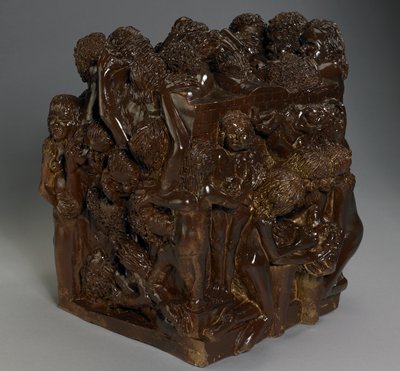
The sculpture is not very big. It measures 12 and a quarter inches by 11 and a half by 11 and a half. It’s an intertwined press of people around a structure, brown arms, legs and heads – frantically climbing on top of each other to get to the top – as if their lives depended on it.
It’s the awarded sculpture titled, “Hope for Tomorrow,” and was created by the sculptor and arts activist, Frank J. Brown.
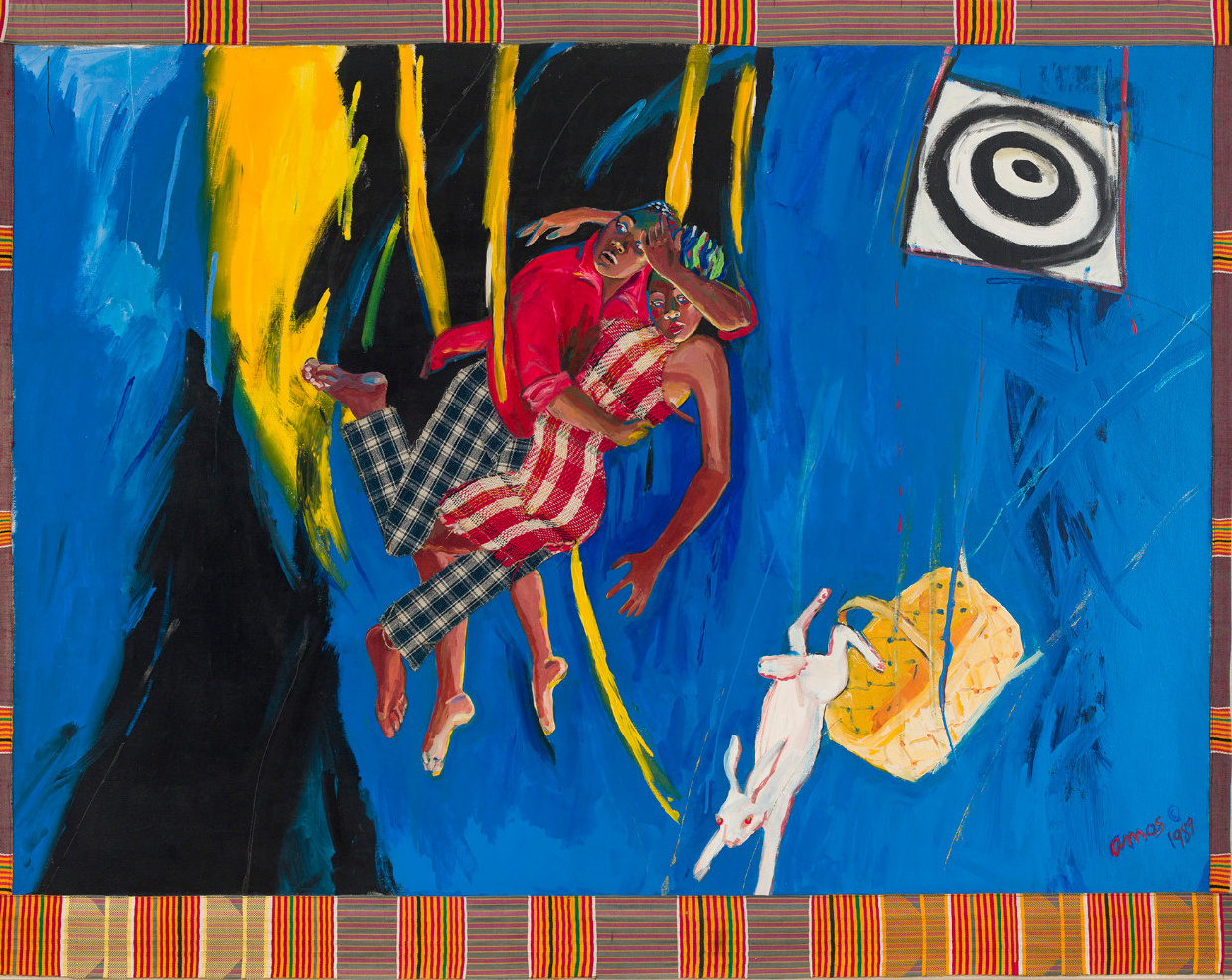
The canvas is bordered by what looks to be kente cloth. Against a bright blue background with slashes of yellow and strokes of black, a man in blue and white plaid pants – fear in his eyes – embraces a woman in a red and white plaid dress. She’s looked down – clearly distressed. Not far from them is a stretching white rabbit and a overturned basket. Above the basket is a black and white bull’s eye. You feel the movement in your chest and you understand the couple’s terror. They are falling… not to the ground, but through space… maybe even through time.
This is the 1989 work by Emma Amos titled, “Target.” It’s a great example of multiple elements Amos built upon through her entire artistic career.
“Emma Amos”. The Museum of Modern Art. Retrieved 2 June 2020.
Klacsmann, Karen T. “Emma Amos (b. 1937)”. New Georgia Encyclopedia. Retrieved 14 March 2017.
It’s been a while, but do you remember how resourceful I tried to be as a broke teenager? You remember how I wanted to paint like Bob Ross, but didn’t have any money for supplies? How I could only afford two colors, so I chose black and white? I did a lot of those paintings. Black, white and shades of grey.
In fact, your sister has one. It’s of me in shorts and a tank top with one large, door-knocker earring in my left ear. My hair is braided into a ponytail and I’m sitting on the steps of our porch at our house on Almond Drive. I’m smiling with bare feet. The painting used to hang on a wall when she had her house. I don’t remember seeing it in her apartment. I’m assuming it’s still there.
One of those black and white paintings, the one titled, “Puzzle,” isn’t on canvas though. It looks like it’s on butcher paper, but I’m pretty sure I remember painting it on a piece of paper bag. I wouldn’t have had money for butcher paper. I remember trimming the edges so that no one could tell it was a grocery bag. I was proud darn proud of myself then.
(The full essay titled, “Puzzle” was originally published in the Wilderness House Literary Review, Vol. 14 Number 4).

 The Whole Art Nebula